

Channel custom dimension
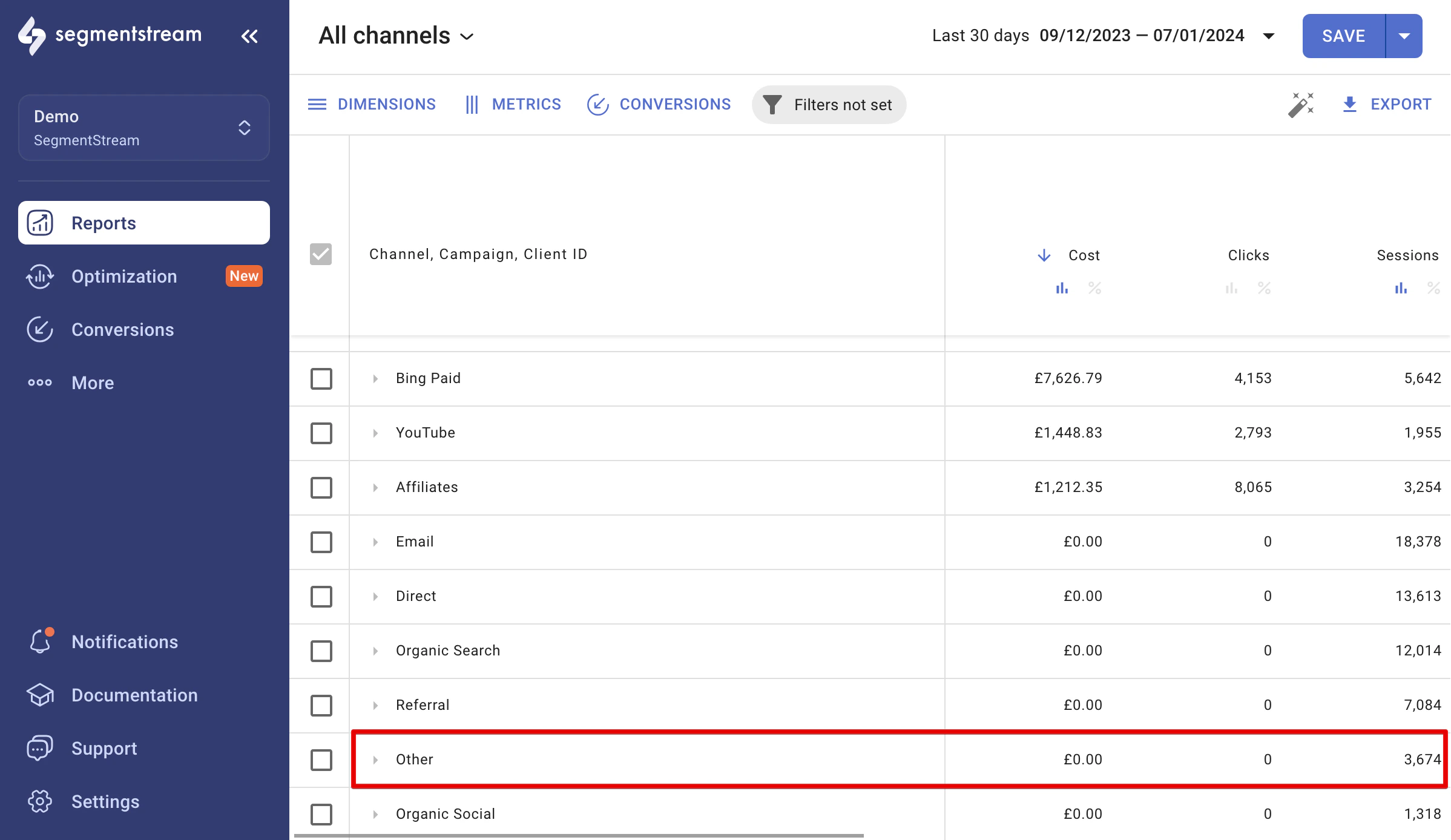
The Channel custom dimension is predefined and automatically available in all projects. It streamlines analysis of traffic from different sources.Default channel groups
- Google Ads — all sessions and ad spend from paid Google Ads.
- Facebook — all sessions and ad spend from paid Facebook.
- Organic Search — all sessions from organic search traffic.
- Organic Social — all sessions from organic social network traffic.
- Email — all sessions from email and newsletter traffic.
- Referral — all other referral traffic.
- Direct — all sessions from direct website access (typing the URL, bookmarks, or untracked sources).
How to set up a custom dimension
1
Navigate to the reports section
Open the Attribution reports.
2
Open the dimensions panel
Click Dimensions.
3
Add a custom dimension
Scroll down the dimensions list and click + Add custom dimension.
4
Name your dimension
Enter a name for your custom dimension.
5
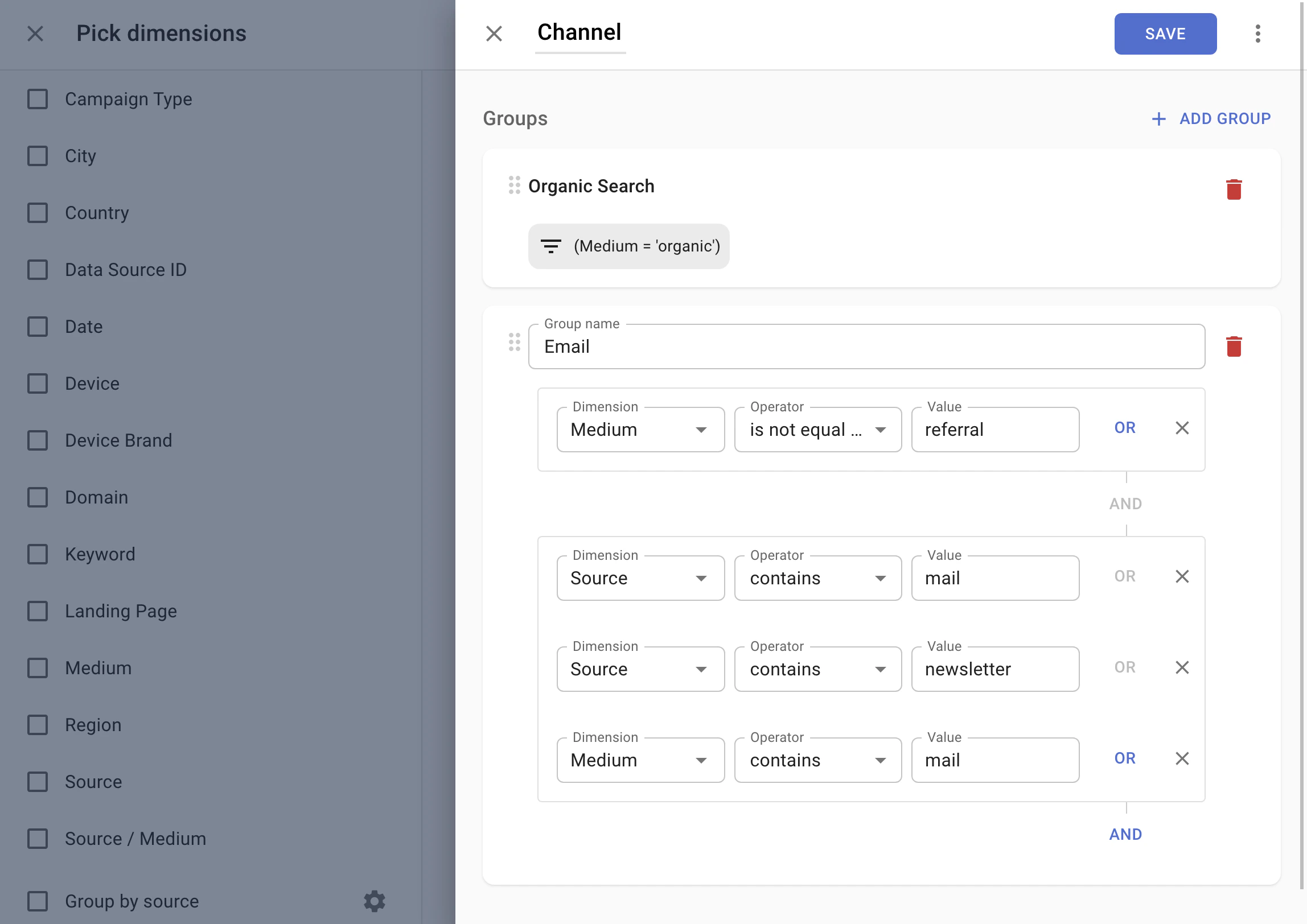
Create custom groups
Name your first custom group and set the filters that apply to it. For more information on filtering, see data filtering.
6
Add more groups
Click + Add group to create additional custom groups.
7
Save
Click Save. Your custom dimension is now available in reports and optimisation portfolios.
Using custom dimensions in reports
To view data grouped by your custom dimension, select it from the dimension list like any other dimension. Custom dimensions can be edited at any time by clicking the cogwheel icon.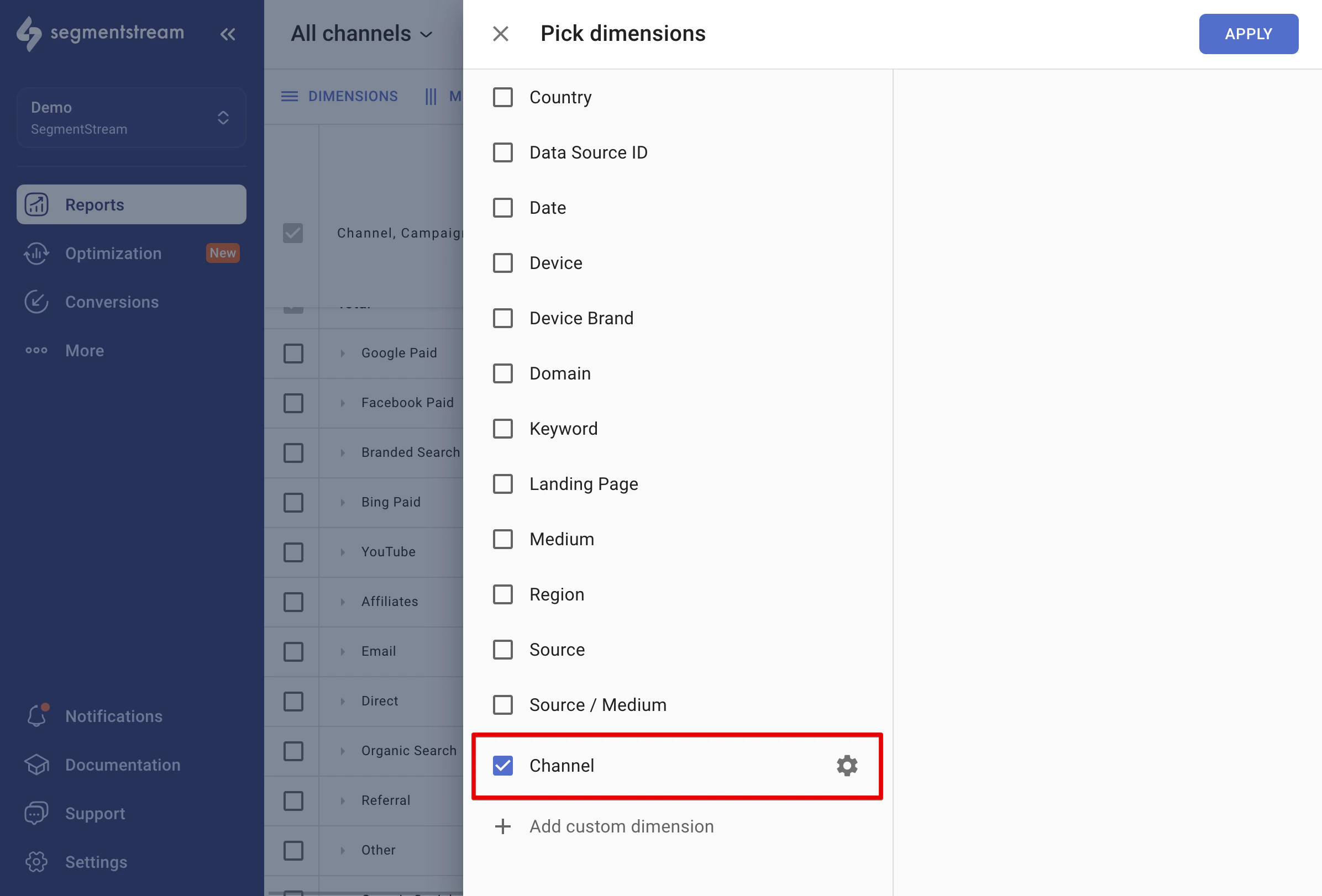
Using custom dimensions in optimisation portfolios
Custom dimensions are visible as granularity options during portfolio creation only if they are built from one of these dimensions:- Ad Platform
- Ad Account
- Campaign
- Campaign Type
- Medium
- Source
- Source/Medium